Wood → Gas → Pure Carbon.
Traditional bush charcoal is inconsistent, smoky and short-burning. Luvatsi is built differently. We use pyrolysis — the controlled thermal decomposition of wood at 600–900 °C inside a sealed, low-oxygen chamber. This drives out water, sap and volatile gases, leaving a hardened, carbon-rich skeleton of the original wood.
Phase 01
Raw Feedstock
Sustainably sourced biomass is prepared and loaded into the sealed pyrolysis chamber.
Phase 02
Thermal Reform
Temperature climbs to 600–900 °C in a low-oxygen environment. Water, sap and volatile gases vaporise and escape — combustion cannot occur.
Phase 03
Pure Carbon
What remains is a hardened, carbon-rich skeleton of the original wood — dense, dry, and ready to burn clean.
Pyrolysis temperature range
Luvatsi's process runs in the 600–900 °C window — the sweet spot where volatiles are fully driven off and the carbon lattice locks in for maximum caloric output.
Why it burns cleaner.
56%
Fewer toxic emissions
Less indoor air pollution — a direct win for the person cooking, usually a woman or child.
58%
Less fuel per meal
Every meal costs less charcoal. Every bag lasts longer. Household energy budgets drop 30–50%.
56%
Faster cook time
1 litre boils in 5 minutes. Cook time drops by more than half versus a traditional charcoal stove.
Every bag protects Eswatini's forests, air & families.
Deforestation
Higher caloric output means fewer trees felled per household per year — easing pressure on Eswatini's woodlands.
Indoor Air
Volatile compounds are removed during pyrolysis, so what actually burns in your kitchen is cleaner — protecting the lungs of women and children.
Carbon
Programme potential of 10,000–20,000 tonnes CO₂e avoided annually through the Alliance's clean-cooking transition.
The ECOA Pro stove-pot evidence.
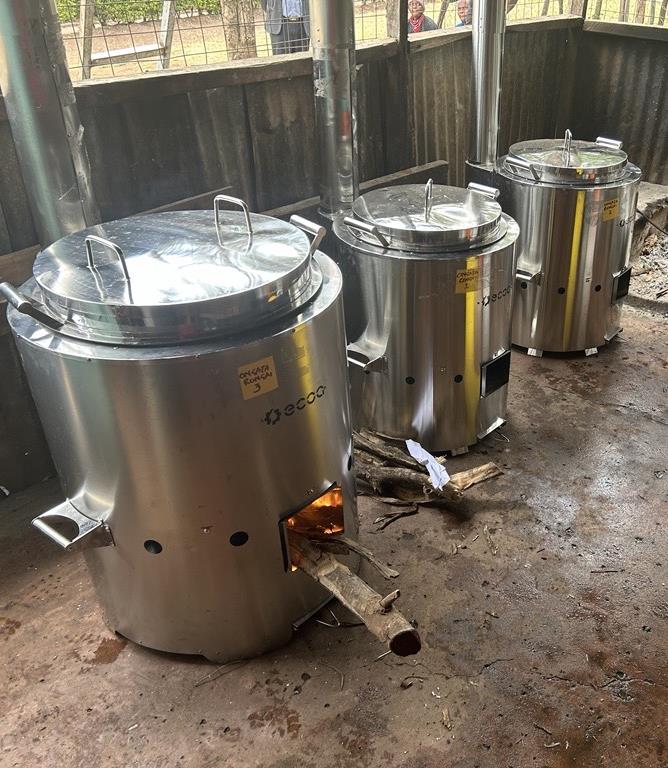
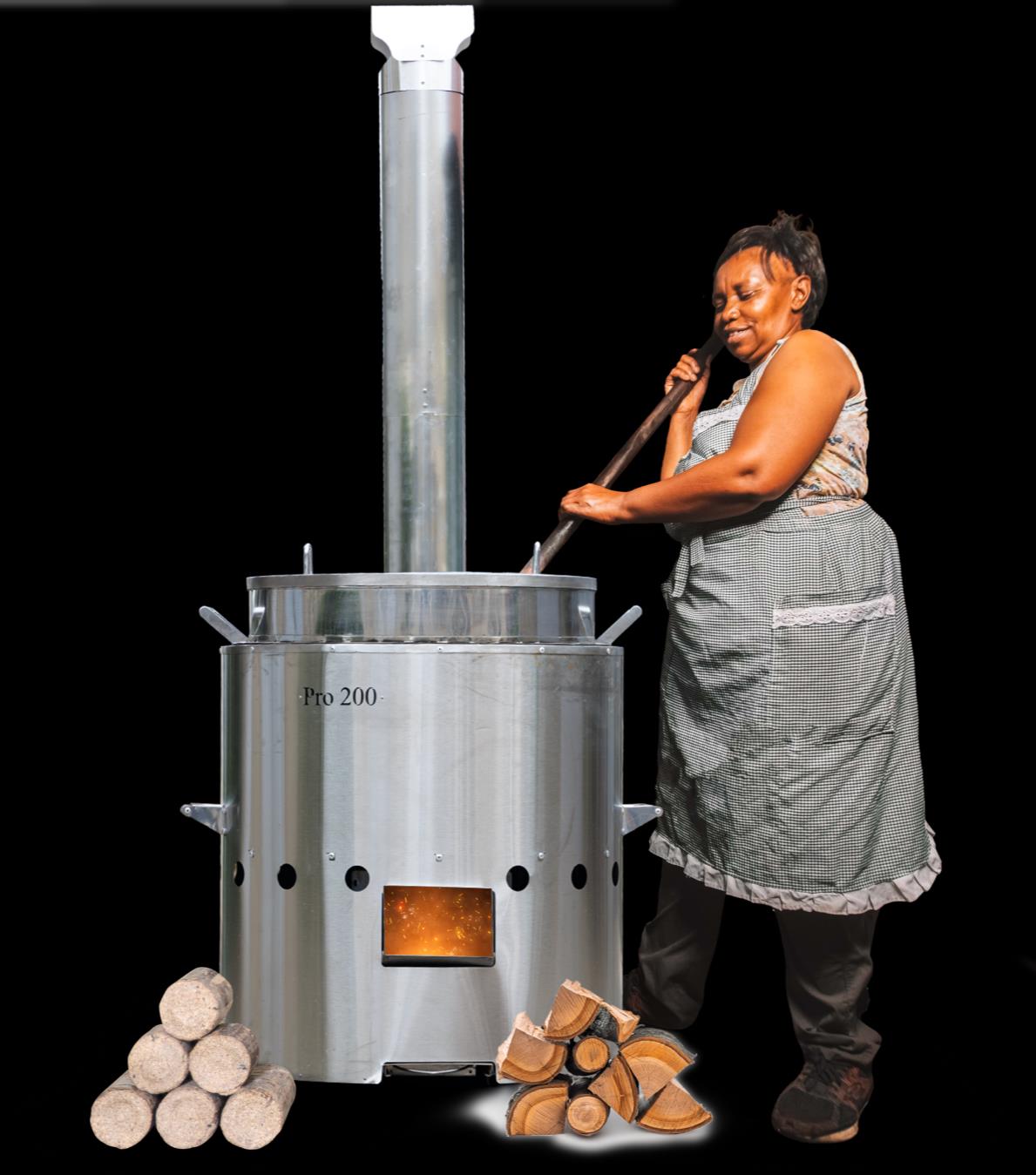
The same science scales up. In institutional kitchens the ECOA Pro stove-pot pairs an insulated 65%-efficient pot with a sealed firebox, delivering up to 72% fuel savings and 46% faster cooking against a three-stone fire.
72%
Fuel savings
46%
Faster cooking
5–7 yr
Lifetime
The numbers
Measured in kitchen performance tests across schools running the ECOA Pro range.
Fuel cost to cook for 100 people
Emalangeni (E) per 100 people
Time to cook
Indexed — three-stone fire = 100
Annual fuel cost by kitchen size
Conventional stove versus ECOA Pro on wood and on briquettes (Emalangeni per year).
400 people
600 people
1,200 people